
September 18, 20243 min read
4 Advantages of Choosing a Professional Web Design Agency
Blog
October 22, 2025
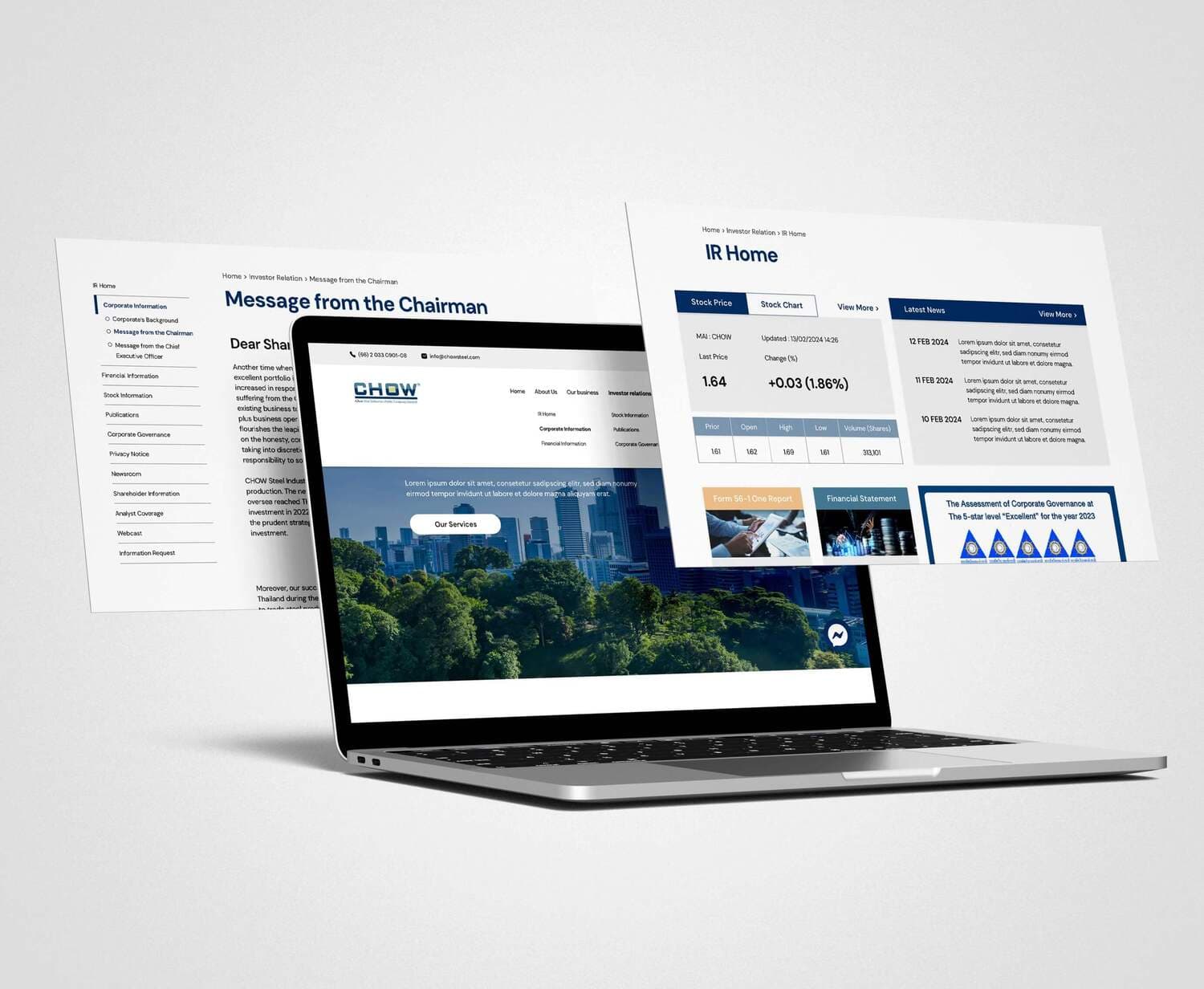
A website is more than just a digital face of a company; it serves as a “central hub of communication and a vital information resource” that connects the organization with its shareholders, investors, business partners, and the general public. For public companies, a website that is designed according to governance principles is crucial in establishing credibility and a sustainable corporate image.
This article comprehensively explains the essential factors to consider when designing a public company website. From basic concepts, UX/UI strategies, and data structure to future trends and tips on choosing a web development company that understands both technology and corporate communication.
A website today plays more than just a role in marketing—it is a “corporate communication hub” that reflects the company’s identity, stability, and transparency to the public, investors, and shareholders. A well-designed website acts as both a “communication tool” and a “trust-building mechanism,” particularly in an era where investors make decisions based on online information in just minutes.
A professional, well-crafted website for a public company helps enhance the organization’s image by:
Therefore, designing a public company website is more than just creating a platform; it is about “strategizing corporate image” at the highest level of communication.
Public company websites have distinct features that set them apart from regular websites. These differences can be seen in content, design, and information management. Below is a comparison:
| Aspect | General Website | Public Company Website |
|---|---|---|
| Primary Goal | Promote products/services | Communicate corporate information to investors and shareholders |
| Target Audience | Customers | Investors, shareholders, regulatory bodies |
| Content | Product news, promotions | Financial reports, shareholder info, ESG data |
| Legal Requirements | No specific regulations | Must comply with SEC and stock exchange regulations |
| Design Focus | Aesthetic appeal | Clarity, transparency, and credibility |
The website should include:
This content should be organized clearly, with accompanying visuals that represent the company’s identity, assuring visitors that the company is managed professionally and transparently.
This section is crucial for public companies, as it provides investors with the information they need before making investment decisions. Key content should include:
This section should share important corporate news such as press releases, executive changes, and social responsibility activities. The content should be stored in an easily searchable format by year or category.
A public company must disclose information related to environmental, social, and governance (ESG) matters. The website should have a dedicated “Sustainability” section with infographics or animations to make the information easy to understand.
The website should provide secure contact forms and a whistleblowing system to encourage transparency and build trust within the organization.
All information on the website must be verifiable, regularly updated, and clear—aligning with the guidelines of the Securities and Exchange Commission (SEC) to ensure transparency.
The overall design should convey the image of a “large, well-managed organization.” From color schemes and fonts to images and menu structures, every element should reflect stability and responsibility.
The website’s user interface should be intuitive, ensuring that visitors can easily find the information they need. The design should prioritize usability and accessibility, accommodating all user groups.
Public company websites must use HTTPS and feature automatic data backups, along with notification systems that alert administrators to any changes in critical content.
The content on a public company website should strike a balance between “business-related facts” and “brand storytelling.”
The technology behind the website is critical, particularly for public companies that need high stability. Key technologies include:
The future of public company websites will go beyond just “information dissemination” and move toward becoming “interactive communication platforms.” This could include features like:
These features will make the website a “living communication channel” that reflects the organization’s readiness to fully embrace the digital age.
Selecting the right web development company for a public company website is crucial. The company must understand UX/UI, corporate communication, and stock market regulations. A qualified company should have:
1. Experience designing large-scale corporate websites
2. Knowledge of IR and ESG data structures
3. A team familiar with corporate branding
4. A secure and easy-to-manage backend system
5. Strategic consulting on corporate image and communications




Designing a public company website is a process that integrates “corporate strategy” with “user-focused design.” The website must not only provide comprehensive information but also reflect the organization’s credibility, transparency, and sustainability. Key considerations include data transparency, system security, UX/UI design, accessibility, and universal communication. If your organization is looking for a web development company with expertise in designing and developing corporate websites, Avery and Co. is here to be your partner in creating a complete and high-quality public company website that meets communication, branding, and technological standards.
Avery and Co. are experts in designing public company websites, combining brand understanding, technology expertise, and professional corporate communications.