May 06, 20253 min read
A Deep Dive: 6 Things You Must Know!! About Packaging Design: From Art to the Consumer’s Hands
Blog
January 15, 2026
Every year, the worlds of design, fashion, marketing, and branding pause in anticipation for one highly anticipated moment the announcement of the Pantone Color of the Year. This annual reveal is never just about a color. It represents a reflection of global emotions, collective mindsets, and the cultural direction of the world at a given time.
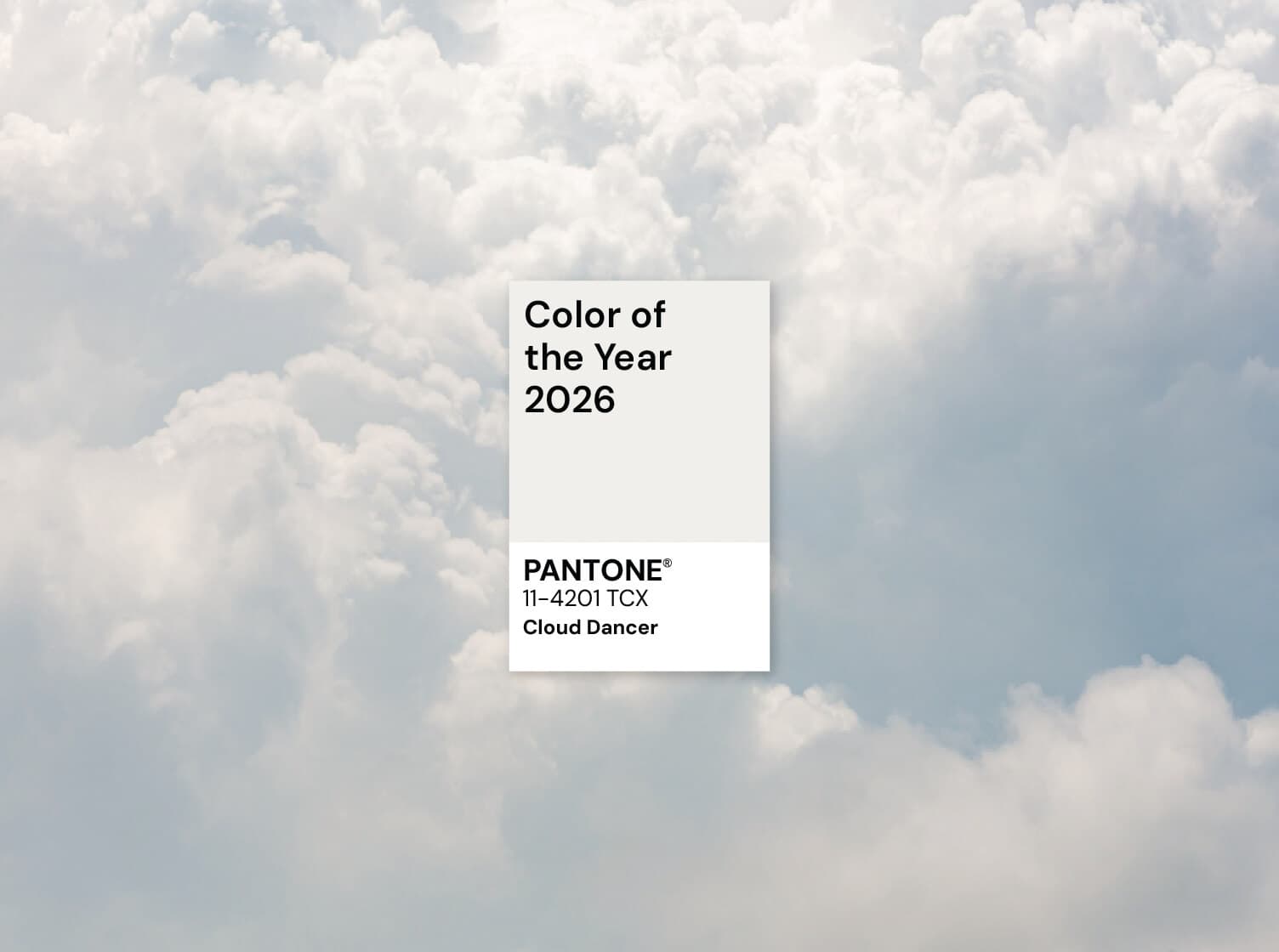
In Pantone 2026, the announcement sent a powerful ripple through the creative industries when Pantone selected a color that appears deceptively simple, yet profoundly impactful: “Cloud Dancer.” The choice immediately sparked discussion across the design community. How could a soft white often perceived as neutral or even “colorless” claim the highest position as the Pantone Color of the Year?
This article explores Pantone from its foundations what it is, why the world needs a standardized color system, how colors are selected each year and examines how Cloud Dancer can be strategically applied to branding. It also analyzes both the strengths and limitations of Pantone as a global design authority.
Pantone is a color standardization system created to solve a long-standing industrial problem: the same color looking different across different producers. In the past, a color printed by one printing house might look noticeably different from the same color printed elsewhere, even if it shared the same name.
To address this, Pantone developed the Pantone Matching System (PMS) a universal color language that allows designers, printers, manufacturers, and brands worldwide to reference colors with precision and consistency.
Over time, Pantone evolved beyond being a purely technical tool. It became a shared visual language across industries such as graphic design, fashion, architecture, and branding. Eventually, Pantone expanded its role further by interpreting the emotional and cultural state of the world through the Pantone Color of the Year program.
Seen in this context, Pantone 2026 is not merely about selecting a color it represents a broader conceptual shift in how the design world communicates meaning.
While some may view the Color of the Year as a marketing initiative, its function is far more strategic. The Pantone Color of the Year serves several important purposes:
As consumers increasingly make decisions based on emotional resonance rather than pure functionality, color has become one of the most powerful tools in brand communication. Pantone 2026 demonstrates that simplicity can often communicate more deeply than visual noise.
The official authority responsible for announcing Pantone’s annual color is the Pantone Color Institute, a research division operating under Pantone LLC.
The selection of Pantone 2026 and the designation of Cloud Dancer as the Pantone Color of the Year is not the result of a public vote or a purely marketing-driven decision. Instead, it is the outcome of extensive research conducted by a multidisciplinary team of color experts, cultural researchers, psychologists, and global trend analysts.
The Pantone Color Institute is responsible for:
Its work spans multiple industries—from fashion and technology to automotive design, packaging, and lifestyle branding—giving Pantone’s color announcements substantial industrial credibility, not just artistic relevance.
For Pantone 2026, Pantone selected PANTONE 11-4201 “Cloud Dancer” a soft white that avoids stark brightness, cool grayness, or yellow undertones. It sits delicately between purity and warmth.
Symbolically, Cloud Dancer represents:
This marks the first time in history that the Pantone Color of the Year has centered on white. The decision reflects a global shift toward valuing stillness over spectacle and balance over excess.
Historically, Pantone colors often mirror the world’s emotional state:
In this context, Pantone 2026 emerges from a world fatigued by speed, noise, and information overload. Cloud Dancer becomes not just a color, but a deliberate pause in the narrative of design.
From a design perspective, Cloud Dancer shifts the role of color from being the centerpiece to becoming the stage. Within Pantone 2026, color is no longer meant to command attention, but to shape experience.
This shift redefines how designers think about visual hierarchy and emotional engagement.
Applying Cloud Dancer effectively does not mean turning everything white. Instead, it involves using the color as a brand canvas—a foundational layer that supports identity and storytelling.
Brands that truly understand the Pantone Color of the Year treat color as a long-term strategic concept, not a seasonal trend.
In Pantone 2026, Pantone’s strengths are particularly evident, as Cloud Dancer gives brands more freedom to define their own identities.
Understanding the Pantone Color of the Year is more important than simply following it.


Pantone 2026 does not transform the design world through boldness, but through quiet intention. Cloud Dancer invites designers and brands to reconsider a fundamental question: Do we need to be loud all the time?
As the Pantone Color of the Year, Cloud Dancer does not demand that every brand turn white. Instead, it encourages a deeper reflection on the value of space, calm, and authenticity in communication.
Brands that truly understand Pantone 2026 will not merely follow a color trend they will use color as a strategic tool to build long-term relationships with their audiences. And that is the true value of Pantone in today’s design and business landscape.
Blog